Silicone vs 3D-printed moulds: which do you need?
Both have a place. Printed moulds are cheaper and faster for testing; silicone wins on detail, release and long production runs. Here is the honest comparison.

People often ask whether they need a silicone mould or a directly 3D-printed one. The honest answer: it depends on where you are in your product journey.
A 3D-printed mould is quick and cheap. It is great for proving a shape before you invest — you can hold it, cast a few test pieces, and decide if the design works. But printed moulds are rigid. They struggle with undercuts, fine detail and clean release, and they wear out faster.
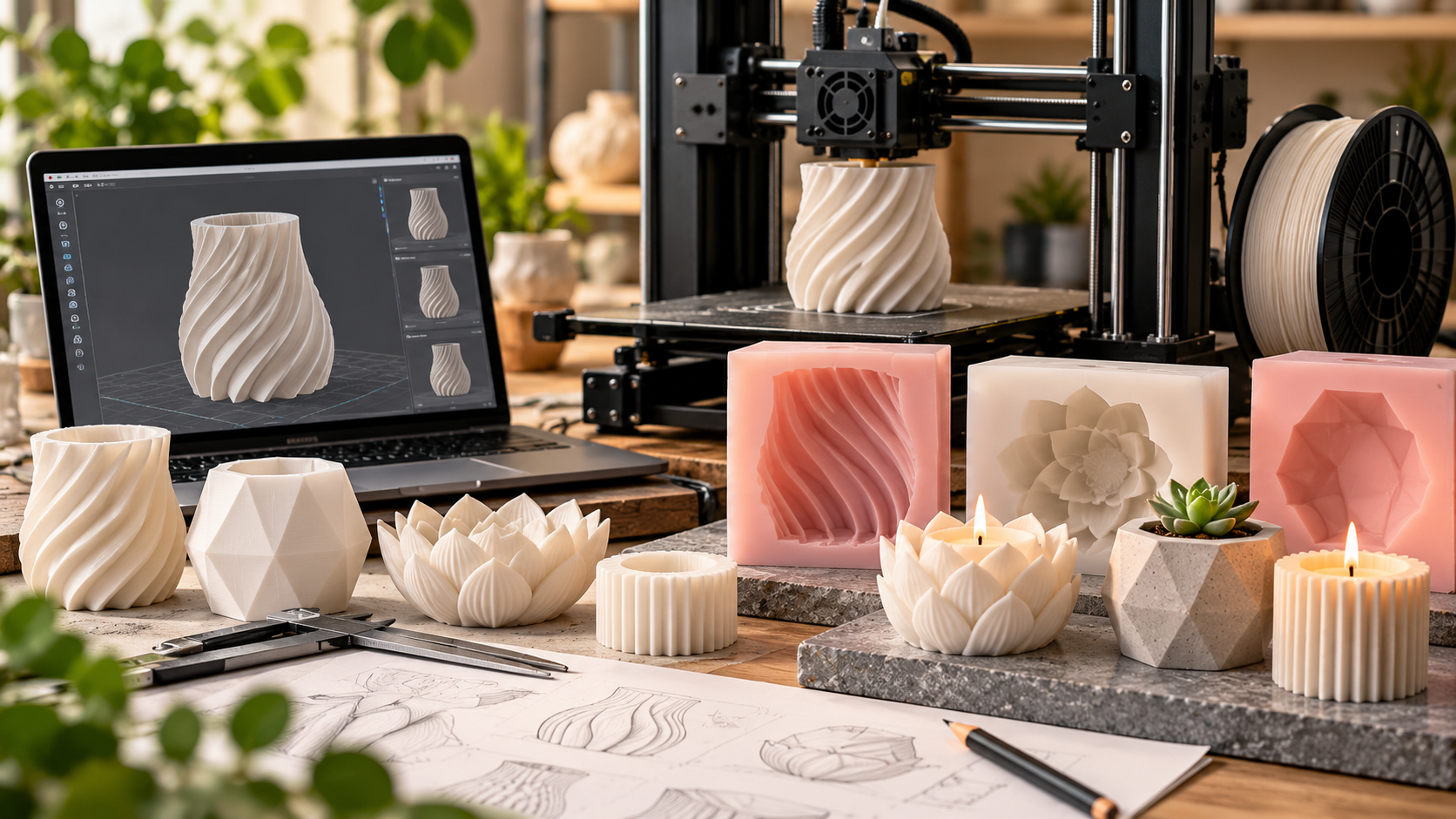
A silicone mould is cast from a 3D-printed master. It flexes, so it releases detailed shapes without cracking them, handles undercuts, and survives hundreds of pulls. This is what most businesses use for real production.
A simple way to think about it: print to test, silicone to sell. Many of our customers start with a trial mould to validate a shape, then move to a silicone production mould once they know it sells.
The material also depends on what you cast. Hot wax, resin, concrete and soap each have different needs, and the right silicone hardness matters. Tell us the product and the volume, and we pick the method — you do not have to learn the difference.